
Where should a carbon monoxide detector be installed? Should it be near the floor, on the wall, at receptacle height, or on the ceiling? The answer depends on the type of CO device, its listing and instructions, the occupancy, the CO source, and the code governing the installation.
Where Should a Carbon Monoxide Detector Be Installed?
One of the most common misconceptions about carbon monoxide detection is that every CO alarm or detector must be installed at one specific height.
You may have heard:
- "Carbon monoxide is heavier than air, so put the detector low."
- "Carbon monoxide is lighter than air, so put the detector high."
- "Every CO detector belongs 5 feet above the floor."
- "Every CO detector belongs on the ceiling."
None of those statements is a universal installation rule.
FACT: There is no universal CO detector mounting height based simply on whether carbon monoxide is slightly lighter than air. Indoor airflow, temperature, convection, HVAC operation and the CO source all affect how carbon monoxide moves. Install the specific CO alarm or system detector according to its listing, manufacturer's published instructions and the applicable code-required location.
Does Carbon Monoxide Rise or Sink?
Carbon monoxide, or CO, has a molecular mass of approximately 28 g/mol. Average dry air is approximately 29 g/mol.
CO is therefore slightly less dense than average air, but the difference is small. In an actual building, carbon monoxide does not normally form a neat layer at the ceiling or floor simply because of that small density difference.
Instead, CO can mix with room air and move with:
- Natural convection
- HVAC airflow
- Supply and return air
- Fans
- Open doors
- Pressure differences
- Temperature differences
- The location and temperature of the CO-producing source
This explains something that otherwise appears contradictory: a listed plug-in residential CO alarm can operate at receptacle height while a fire alarm system CO detector can legitimately be installed on a ceiling.
Both installations can be correct.

CO Alarm vs CO Detector: They Are Not the Same Thing
Before discussing mounting height, it is important to understand the terminology.
Carbon Monoxide Alarm
A carbon monoxide alarm is generally a self-contained device containing the CO sensor, electronics and an integral audible alarm.
These include many of the familiar:
- Plug-in CO alarms
- Battery-operated CO alarms
- Hardwired residential CO alarms
- Combination residential smoke/CO alarms
CO alarms used under the model-code framework are typically listed to UL 2034.
Carbon Monoxide Detector
A carbon monoxide detector used as part of a detection system senses CO and transmits a signal to a control unit.
This is the type of device fire alarm technicians commonly encounter as part of a building fire alarm or carbon monoxide detection system.
System CO detectors are generally listed to UL 2075.
Combination Smoke/CO System Detector
Combination system detectors can provide both smoke and carbon monoxide detection in one listed device.
Under the current IBC framework, combination smoke/CO system detectors used as an alternative to CO detectors are required to be appropriately listed for both functions, including UL 268 for system smoke detection and UL 2075 for CO detection.
These devices are commonly ceiling mounted and may be used with compatible sounder bases or other system notification arrangements.
How High Should a Residential CO Alarm Be Mounted?
For a listed residential CO alarm, there is not one universal mounting height that applies to every product.
Follow the manufacturer's published installation instructions and the requirements of the code adopted by the jurisdiction.
Depending on the listed product, a CO alarm might be:
- Plugged directly into a standard wall receptacle
- Mounted on a wall
- Mounted higher on a wall
- Installed on a ceiling
- Combined with a smoke alarm at a smoke-alarm location
Why Can a Plug-In CO Alarm Be Near the Floor?
This question gets directly to the heart of the mounting-height myth.
Many listed residential CO alarms are designed to plug directly into ordinary electrical receptacles. If the manufacturer's instructions permit that installation, receptacle height is an intended mounting location for that particular product.
The existence of listed plug-in CO alarms is itself a useful reminder that carbon monoxide detection is not governed by a universal rule requiring every CO device to be installed near the ceiling.
Why Are Some System CO Detectors Installed on the Ceiling?
Now consider a different application: a room containing a permanently installed fuel-burning appliance.
NFPA 72's carbon monoxide detector location provisions address system detectors used for building CO protection. One important location is the ceiling in the same room as permanently installed fuel-burning appliances.
Why the ceiling?
The important factor is not simply that CO is slightly lighter than air. Combustion gases leaving an operating fuel-burning appliance can be significantly warmer than the surrounding room air.
Those heated combustion gases can be buoyant and carry carbon monoxide upward during the early stages of a CO event.
This is why a ceiling-mounted system detector near a CO-producing appliance can be appropriate while a listed residential plug-in CO alarm at receptacle height can also be appropriate.
Different device. Different application. Different installation criteria.
Where Does NFPA 72 Require CO Detectors?
NFPA 72 provides installation requirements for carbon monoxide detectors where CO protection is required by another applicable law, code or standard.
This distinction matters:
NFPA 72 generally tells us how the detection and signaling system is installed. The adopted building, fire, residential or other applicable code often determines when CO protection is required.
NFPA 72's system-detector framework addresses locations including:
- The ceiling in rooms containing permanently installed fuel-burning appliances
- Habitable levels and HVAC zones as applicable to the required protection
- Locations associated with sleeping areas where required
- Other locations required by the applicable governing code or standard
Detector placement must also consider environmental and mechanical conditions that could affect detection or produce unwanted alarms, including moisture, temperature, dust, fumes, airflow and potential CO sources.
IBC and IFC Carbon Monoxide Requirements
For many commercial and multifamily projects in the United States, IBC/IFC Section 915 is the starting point for determining where carbon monoxide protection is required.
Historically, model-code CO requirements were concentrated heavily on residential, institutional and educational applications.
The 2024 IBC and IFC significantly expanded carbon monoxide protection. Under the newer model-code framework, CO detection reaches a much broader range of occupancies where specified CO-producing conditions are present.
Those conditions can include buildings containing:
- CO-producing devices
- CO-producing forced-air furnaces
- Attached private garages
- CO-producing vehicles operated within the building
Always verify the code edition actually adopted by the project jurisdiction. A jurisdiction operating under an older I-Code edition may have different scoping requirements.
Where Is CO Detection Required in Dwelling Units?
Under the model-code framework, common required locations in dwelling units include:
- Outside separate sleeping areas in the immediate vicinity of bedrooms
- On occupiable levels of the dwelling as required by the adopted code
- Within a bedroom when a qualifying CO source is located in that bedroom or an associated attached bathroom, where required by the applicable code
Specific requirements and exceptions vary by adopted code edition and jurisdiction.
What About Hotels, Apartments and Other Sleeping Occupancies?
Hotels, apartment buildings, dormitories, residential care facilities and other occupancies containing sleeping units can have additional CO requirements based on the building's occupancy classification, fuel-burning equipment, forced-air heating arrangement, garages and adopted code.
Do not assume that placing one detector somewhere in a corridor automatically satisfies every sleeping-unit requirement.
The building/fire code establishes the required protection, while the detector or alarm must then be installed according to the applicable standard, listing and manufacturer's instructions.
CO-Producing Forced-Air Furnaces
A forced-air furnace introduces another important design issue because a malfunctioning fuel-burning appliance can potentially distribute carbon monoxide through the HVAC system.
Current model-code requirements specifically address buildings containing or served by qualifying CO-producing forced-air furnaces.
This is why the designer must understand both:
- Where the CO source is located
- What areas or zones can be affected by that source
Simply putting one detector in the mechanical room may not address every code-required location.
Attached Garages and Carbon Monoxide Detection
Attached garages are another major CO consideration because internal-combustion vehicles can produce dangerous quantities of carbon monoxide.
The applicable building or residential code can require CO protection in dwelling or sleeping areas associated with an attached garage.
Do not install a residential CO alarm in an arbitrary garage location unless the product is listed for that environment. Temperature extremes, humidity, contaminants and vehicle exhaust can affect equipment suitability.
Combination Smoke/CO Detectors and Sounder Bases
Fire alarm systems increasingly use combination smoke/carbon monoxide detectors, including devices installed on compatible sounder bases.
These devices make the mounting-height discussion especially easy to understand.
A combination system smoke/CO detector may be mounted on the ceiling because:
- It is listed for that installation
- It performs a smoke-detection function requiring appropriate smoke-detector placement
- It also performs the CO-detection function
- The manufacturer's instructions establish the permitted mounting arrangement
The fact that a residential plug-in CO alarm may be installed near receptacle height does not conflict with a ceiling-mounted combination smoke/CO system detector.
They are different products installed under different listings and applications.
What Happened to NFPA 720?
Older Fire Alarms Online articles and older project specifications may reference NFPA 720, Standard for the Installation of Carbon Monoxide (CO) Detection and Warning Equipment.
That is historically important, but NFPA 720 is no longer the current standalone destination for these requirements. Carbon monoxide detection and warning provisions were incorporated into NFPA 72, National Fire Alarm and Signaling Code.
For modern system design, technicians and designers should use the applicable adopted edition of NFPA 72 together with the governing building, fire, residential and mechanical requirements.
UL 2034 vs UL 2075: What's the Difference?
| Standard | Typical Application |
|---|---|
| UL 2034 | Single- and multiple-station carbon monoxide alarms commonly used in residential/sleeping applications |
| UL 2075 | Gas and vapor detectors and sensors, including system-type CO detectors |
| UL 268 + UL 2075 | Combination smoke/CO system detectors where required by the applicable code and listing |
What Sound Does a Carbon Monoxide Alarm Make?
Carbon monoxide alarm notification must be distinguishable from a fire evacuation signal.
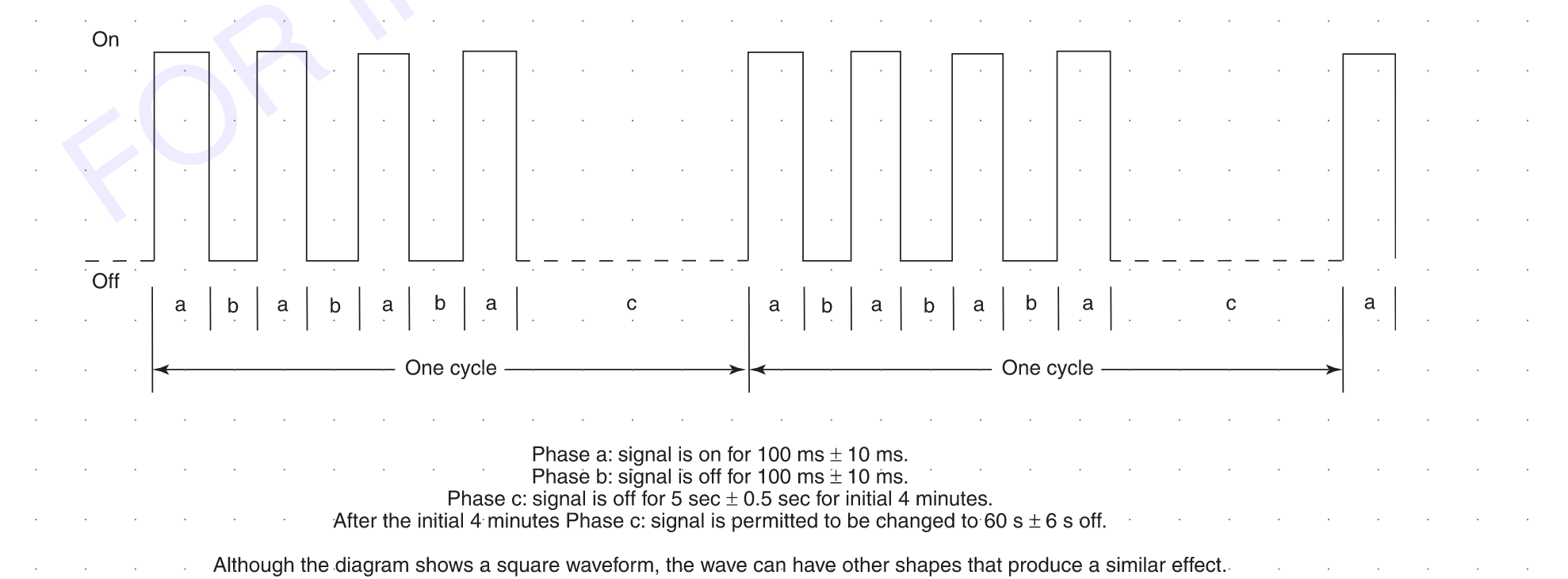
The familiar CO audible pattern is commonly called Temporal 4, or T4.
It consists of groups of four short audible pulses followed by a longer pause, producing a pattern distinctly different from the three-pulse Temporal 3 fire alarm evacuation pattern.
CO Alarm Signal vs Supervisory Signal
Another important change for fire alarm professionals is how carbon monoxide signals are treated at the fire alarm control unit.
Modern NFPA 72 requirements treat qualifying carbon monoxide detector activation as a carbon monoxide alarm signal rather than simply lumping CO detection into a generic supervisory condition.
This distinction affects:
- FACP annunciation
- Monitoring
- Sequence of operations
- Occupant notification
- Notification zoning
- Emergency response procedures
Designers should verify the applicable NFPA 72 edition and approved sequence rather than programming every CO input as a generic supervisory point.
Carbon Monoxide Notification in Sleeping Areas
Where occupant notification is required in sleeping areas, the system must provide the required audible performance at the sleeping location under the applicable NFPA 72 requirements.
Do not assume that a detector installed outside a bedroom automatically guarantees adequate sound inside the bedroom with the door closed.
The required notification design should be evaluated separately from detector placement.
Common CO Detector Installation Mistakes
- Using the "CO rises" rule. CO movement in buildings is more complicated than molecular weight alone.
- Using the "CO sinks" rule. This is equally unreliable as a universal installation method.
- Using a universal 5-foot mounting height. Follow the listing, manufacturer's instructions and applicable code.
- Confusing CO alarms with system CO detectors. They are different product categories with different applications and listings.
- Ignoring HVAC zones. Air movement can transport CO away from the source.
- Ignoring the source. Fuel-burning appliances, garages, vehicles and furnaces can create different detection scenarios.
- Programming CO as a generic supervisory signal without checking the current requirements.
- Using an older NFPA 720 specification without checking the current adopted code.
- Ignoring the manufacturer's instructions. The device's listing and installation instructions are part of a proper installation.
Carbon Monoxide Detector Placement: Quick Reference
| Application | Typical Mounting Concept |
|---|---|
| Plug-in residential CO alarm | Receptacle installation can be permitted when specified by the listed product instructions |
| Wall-mounted residential CO alarm | Follow manufacturer's published mounting instructions |
| Combination residential smoke/CO alarm | Install according to the product listing, instructions and applicable smoke/CO location requirements |
| System CO detector in room containing permanently installed fuel-burning appliance | Ceiling location under the applicable NFPA 72 system-detector framework |
| Combination system smoke/CO detector | Commonly ceiling mounted according to its listing, instructions and applicable system design |
California Carbon Monoxide Requirements
Author's Note: Fire Alarms Online is based in California, so California designers and technicians should also verify the current California Building Code, California Fire Code and California Residential Code requirements.
California has jurisdiction-specific CO provisions, including requirements affecting residential occupancies and existing Group R buildings.
Current California code provisions address locations such as outside separate sleeping areas, occupiable levels of dwelling units and bedrooms containing qualifying CO sources. California also requires approved/listed equipment as applicable.
These California provisions should be treated as jurisdiction-specific requirements rather than automatically applied to projects nationwide.
Frequently Asked Questions About CO Detector Placement
Does carbon monoxide rise?
CO is slightly less dense than average air, but that fact alone should not be used to determine detector mounting height. Temperature, convection and building airflow have a much greater practical influence on how CO moves through occupied spaces.
Does carbon monoxide sink?
CO should not be treated as a gas that simply settles near the floor under normal building conditions. It readily mixes with indoor air and can be transported throughout a space.
Should a CO detector be high or low?
Follow the mounting instructions for the specific listed device and the applicable code. There is no single universal height for every CO alarm and detector.
Can a carbon monoxide alarm be plugged into a wall outlet?
Yes. Listed plug-in CO alarms are available and can be installed at a receptacle where permitted by the manufacturer's instructions and applicable code.
Can a CO detector be mounted on the ceiling?
Yes. System CO detectors and listed combination smoke/CO detectors can have legitimate ceiling-mounted applications. NFPA 72 specifically addresses ceiling placement for system CO detectors in rooms containing permanently installed fuel-burning appliances.
Should a CO alarm be installed directly above a furnace?
Do not apply that as a universal residential alarm rule. Residential CO alarms should be installed according to their manufacturer's instructions and applicable code. System detector requirements for equipment rooms are a separate application.
What's the difference between UL 2034 and UL 2075?
UL 2034 generally applies to single- and multiple-station CO alarms, while UL 2075 covers gas and vapor detectors and sensors used in system applications, including system CO detectors.
What is Temporal 4?
Temporal 4, commonly abbreviated T4, is the distinctive four-pulse audible pattern used for carbon monoxide alarm notification so occupants can distinguish a CO alarm from the Temporal 3 fire evacuation signal.
Bottom Line
There is no universal carbon monoxide detector mounting height based simply on whether CO rises or falls.
A listed plug-in residential CO alarm can legitimately be located at receptacle height. A listed wall-mounted alarm can be located on a wall. A system CO detector can be installed on the ceiling where required, and a combination smoke/CO detector can also be ceiling mounted when installed according to its listing and applicable code.
Use the correct device, install it in the code-required location, follow its listing and manufacturer's instructions, and design around the actual CO hazard rather than an old rule of thumb.
